07521 576338
datumCLIMATE
datumCLIMATE
BoilersOur rangeDatum ConnectAir ConPlumbingCommercialGuides
CallGet my price

Straight answers

Guides from our actual engineers.

Real questions we get asked, answered plainly — including when the answer is “you don't need us for that.” No fluff, no jargon, no upselling.

How much does a new boiler cost in Hertfordshire?Boilers

How much does a new boiler cost in Hertfordshire?

A like-for-like combi swap in Hertfordshire typically costs £2,310–£3,010 installed — including the boiler, flue, system flush, magnetic filter, controls, labour and VAT. That sits inside the 2026 national picture: the big online installers' real quotes cluster around £1,800–£3,500 for a standard swap, with a median close to £2,300. A conversion (say, system boiler to combi) runs higher — typically £3,200–£4,300 with us, and £3,000–£5,700 across the market — because pipework and cylinder removal are involved. Anyone quoting far below these ranges is leaving something out of the job or out of the price.

DDavid · Founder, Datum · 3 min
Why is my boiler losing pressure?Boilers

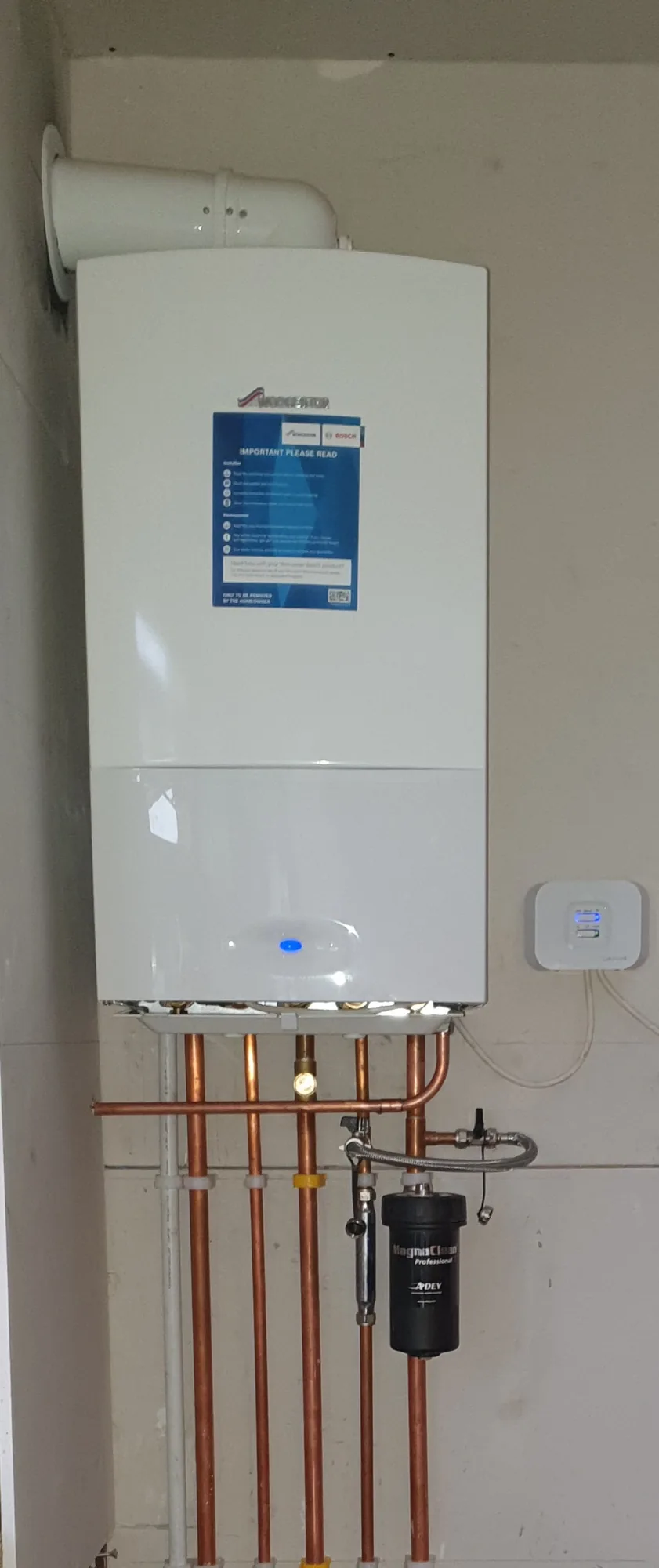
Why is my boiler losing pressure?

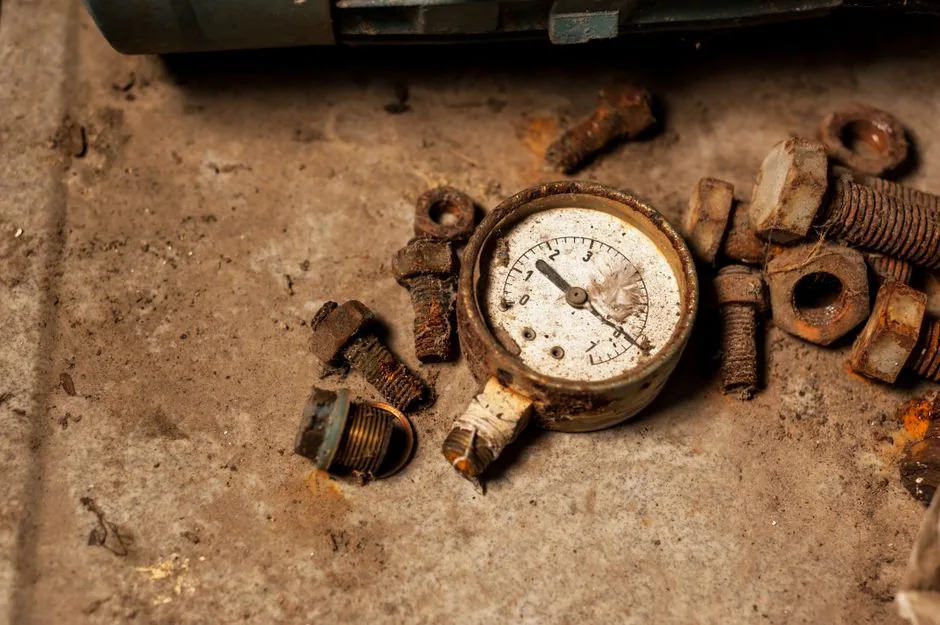
Boiler pressure between 1 and 1.5 bar (cold) is normal. If you've topped it up once this year, that's ordinary. If you're topping up every few weeks, something is letting water out — most often a tiny leak on a radiator valve or joint, a weeping pressure-relief valve, or an expansion vessel on its way out. None of those fix themselves, and repeated topping up masks the symptom while the cause quietly gets worse.

DDavid · Founder, Datum · 3 min
Do I need a CP12 as a landlord in Hertfordshire or London?Landlords

Do I need a CP12 as a landlord in Hertfordshire or London?

Yes. If you let a property with any gas appliance, flue or pipework, the law requires an annual Landlord Gas Safety Record — the CP12 — carried out by a Gas Safe registered engineer. You must give tenants a copy within 28 days of the check (or before they move in), and keep records for two years. There's no exemption for 'good condition' appliances, and the fines for missing it are far larger than the certificate costs.

TDThe Datum team · Heating, cooling & plumbing engineers · 3 min
How much does home air conditioning cost in the UK?Air con

How much does home air conditioning cost in the UK?

A single-room air-to-air system (one indoor wall unit, one outdoor unit) typically costs £1,800–£2,600 installed in the UK — 2026 market guides put the spread at roughly £1,500–£3,000 depending on unit and job, with premium brands like Daikin and Mitsubishi Electric running £1,800–£3,200. Multi-room systems start around £3,400 and scale with each room (market guides: £2,800–£4,500 for two rooms, £3,200–£5,800 for three). Because these systems are air-to-air heat pumps, they heat in winter as well as cool in summer — which is the half of the value most people miss when comparing quotes.

TDThe Datum team · Heating, cooling & plumbing engineers · 3 min
Combi or system boiler — which is right for my home?Boilers

Combi or system boiler — which is right for my home?

For most homes with one bathroom, a combi wins: instant hot water, no cylinder, no tank in the loft, lower install cost. For households running two or more showers at once, a system boiler with a hot-water cylinder wins — a combi shares its output between taps, so the second shower goes lukewarm. The right answer is about how your household actually uses hot water, not which boiler is 'best'.

DDavid · Founder, Datum · 3 min
What should a proper boiler service include?Boilers

What should a proper boiler service include?

A proper annual service includes: a flue gas analysis (combustion check with an instrument, not a glance), gas pressure and flow checks, inspection of the flue run and terminal, operation of all safety devices, checks on system pressure and the expansion vessel, controls operation, a visual inspection for corrosion and leaks — all recorded, with the record left with you. It takes 45 minutes to an hour. A five-minute look and a sticker is not a service, whatever the invoice says.

DDavid · Founder, Datum · 3 min
How much does air conditioning cost to run in the UK?Air con

How much does air conditioning cost to run in the UK?

Cooling a typical bedroom or living room costs roughly 15–40p per hour at current electricity prices, depending on the unit size, the temperature outside and how hard it's working. Used sensibly (cooling the room you're in, doors closed, a realistic set-point), a UK summer's cooling usually totals tens of pounds, not hundreds. In winter the same unit heats the room at roughly a third of the cost of electric radiators, because heat pumps move heat rather than generate it.

TDThe Datum team · Heating, cooling & plumbing engineers · 3 min
Do I need planning permission for air conditioning in the UK?Air con

Do I need planning permission for air conditioning in the UK?

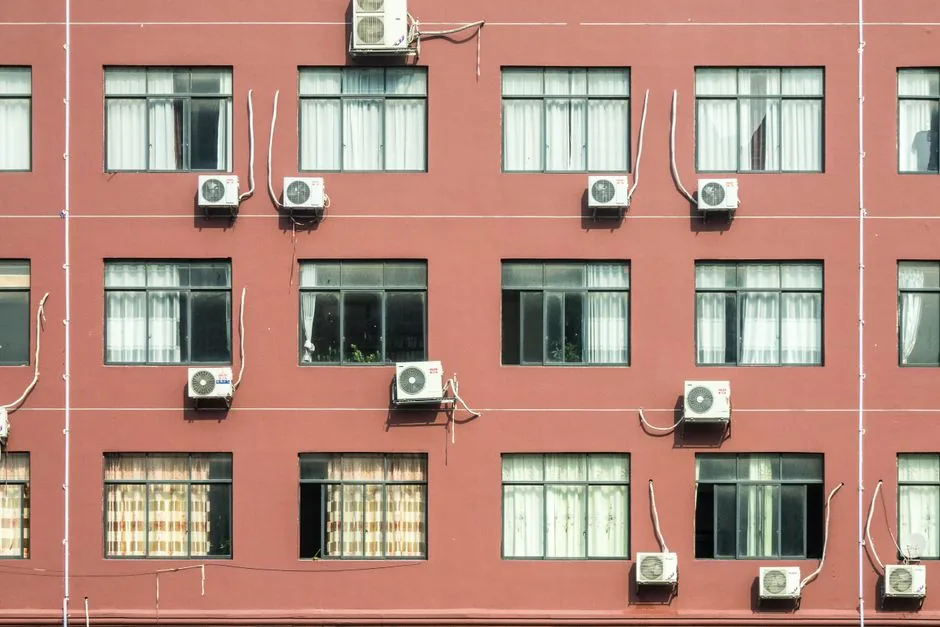
Usually no. Most houses can have an air-conditioning outdoor unit installed under permitted development rights, provided the unit meets the size and siting conditions (one unit, sensible position, not on the principal elevation facing a highway in some cases). The common exceptions: flats and maisonettes (freeholder/management consent, and planning rules differ), listed buildings (consent needed), and conservation areas (extra siting restrictions). We confirm which applies at the survey — before you commit.

TDThe Datum team · Heating, cooling & plumbing engineers · 3 min
How long does a boiler last — and when should I replace mine?Boilers

How long does a boiler last — and when should I replace mine?

A decent modern boiler, serviced annually, lasts 12–15 years — some soldier on longer, but efficiency falls and parts get scarcer and pricier past that point. The rule of thumb: under 10 years old with a single fault, repair; over 12–15 with rising bills, repeat faults or discontinued parts, replacement usually wins on total cost within a couple of years. The worst option is the one most people choose: waiting for the fatal breakdown on the coldest week of the year.

DDavid · Founder, Datum · 3 min
What size boiler do I need for my house?Boilers

What size boiler do I need for my house?

For a combi, size is driven mostly by hot-water demand: a one-bathroom home typically suits 24–30kW; larger homes with a big bath or two bathrooms, 30–35kW; beyond that, a combi may be the wrong type entirely (see system boilers). For heating alone, most UK homes need far less than people think — oversized boilers cycle on and off inefficiently. Proper sizing counts your radiators, bathrooms and mains flow rate; it isn't read off the house price.

DDavid · Founder, Datum · 3 min
Why is my boiler making banging, gurgling or whistling noises?Boilers

Why is my boiler making banging, gurgling or whistling noises?

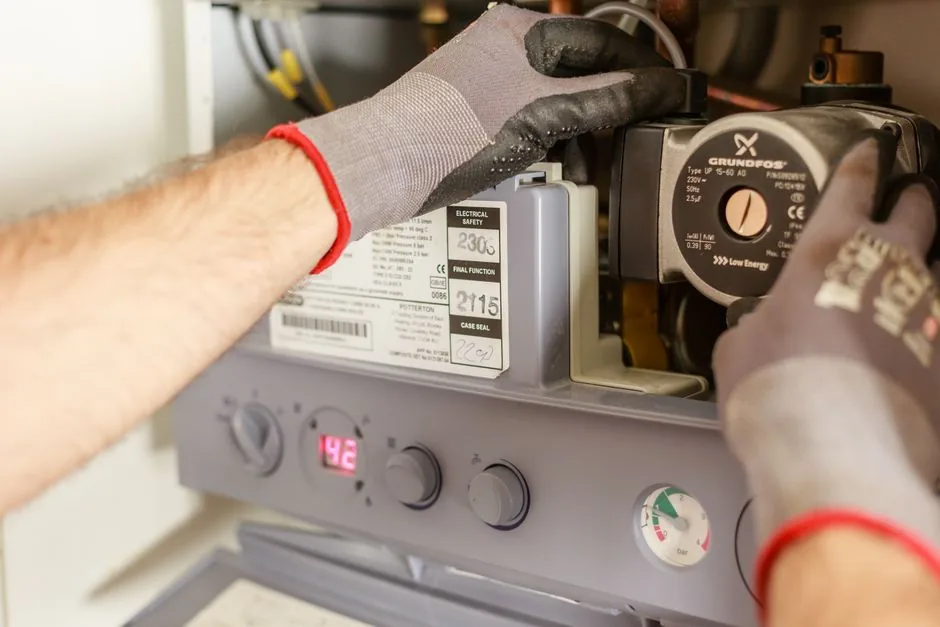
Most boiler noises map to a known cause: a rumbling 'kettling' usually means limescale or sludge on the heat exchanger; gurgling is usually trapped air or low pressure; banging on start-up can be delayed ignition — that one's worth an engineer promptly; tapping and ticking is often normal thermal expansion; whistling tends to be flow restriction or a pump issue. The pattern (when it happens, where it's loudest) tells most of the story — a short video with sound lets us tell you which you have before anyone books anything.

DDavid · Founder, Datum · 3 min
Heat pump or new boiler — what should I actually do in 2026?Heat pumps

Heat pump or new boiler — what should I actually do in 2026?

Honestly: for a well-insulated home with generous radiators (or underfloor), an air-source heat pump is a serious option — and government grants exist for qualifying installs, claimed through MCS-certified installers. For a typical draughty UK home with microbore pipework and standard radiators, a modern boiler is still often the pragmatic swap today — with the house prepared (insulation, radiator upgrades) so a heat pump is the natural next step. And there's a middle path most people miss: air-to-air heat pumps (air conditioning that heats) can take over room-by-room heating now at low cost.

TDThe Datum team · Heating, cooling & plumbing engineers · 3 min
Why is my boiler leaking water?Boilers

Why is my boiler leaking water?

Water under or inside a boiler is never normal, but the cost swings enormously with the cause. The common, cheaper ones: a perished pump or valve seal, or a weeping pressure-relief valve because system pressure is running too high (often a failing expansion vessel). More serious is corroded internal pipework — and the one that usually ends a boiler's life is a cracked heat exchanger. If water is actively dripping, especially near the electrics, switch the boiler off at the fused spur, catch the water, and book an engineer before a slow leak finds your floors and ceilings.

DDavid · Founder, Datum · 3 min
Why does my boiler keep turning off or cutting out?Boilers

Why does my boiler keep turning off or cutting out?

A boiler that fires then cuts out is protecting itself from something — the trick is which something. The most common causes are low system pressure (check the gauge — below ~1 bar cold and it may lock out), a frozen condensate pipe in cold weather, poor water circulation from a stuck pump, sludge or a closed valve, or air in the system. Those are often fixable. A boiler that ignites with a bang and then drops out, or throws the same fault code straight after every reset, needs an engineer promptly — repeatedly resetting a boiler that's failing to fire safely is the one thing not to do.

DDavid · Founder, Datum · 3 min
Why has my boiler got heating but no hot water (or vice versa)?Boilers

Why has my boiler got heating but no hot water (or vice versa)?

When one works and the other doesn't, the fault is usually in the part that decides where the heat goes — not the boiler's ability to make heat. On a combi, heating-but-no-hot-water (or hot-water-but-no-heating) most often means a stuck diverter valve, or a failed flow sensor that isn't telling the boiler you've opened a tap. On a system or heat-only boiler with a cylinder, no hot water can be the cylinder's immersion, a motorised valve, or the programmer. It's rarely a whole-new-boiler problem — but it does need an engineer to pin down which component.

DDavid · Founder, Datum · 3 min
How much does a new boiler cost in a Victorian or older house?Boilers

How much does a new boiler cost in a Victorian or older house?

A like-for-like boiler swap in a period property typically lands in the same £2,310–£3,010 range as any combi swap, but older houses more often need the extras that nudge it toward the top of that band or into a conversion — because of what's behind the walls, not the boiler itself. What moves it: microbore or lead pipework, a flue that has to route through an old chimney, no easy filling loop or condensate route, and years of sludge that make a proper system flush non-negotiable. We give you the honest fixed price after a free survey — no guesswork off a postcode.

DDavid · Founder, Datum · 3 min
How long does it take to fit a new boiler?Boilers

How long does it take to fit a new boiler?

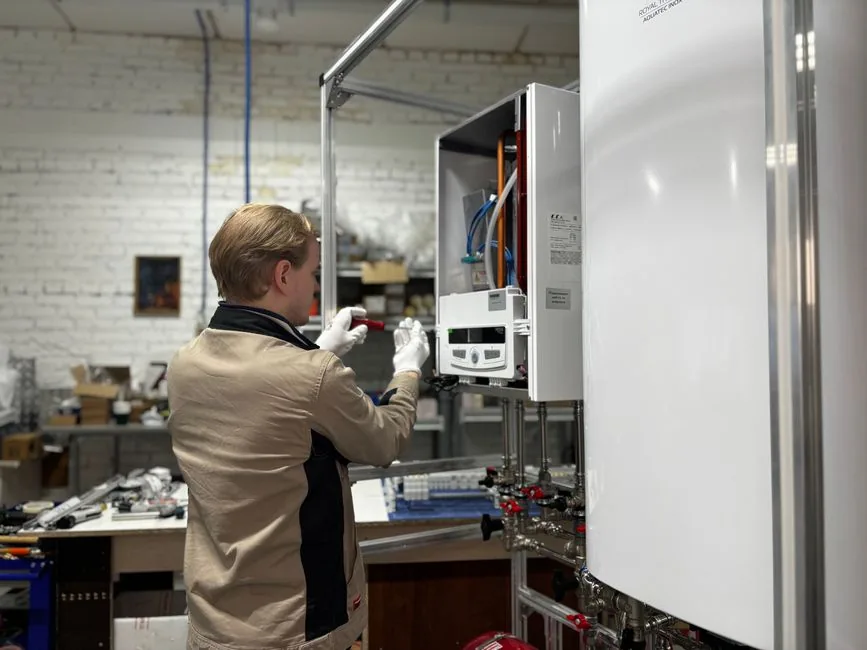
A straightforward like-for-like combi swap is almost always a one-day job — out with the old, in with the new, flushed, tested, controls set and handed over, often with your heating back on by evening. It stretches to two or three days when the job is more than a swap: converting from a system boiler to a combi (or vice versa), moving the boiler to a new location, upgrading pipework, or fitting a cylinder. A proper installer tells you the realistic timeline at the quote, not on the morning.

DDavid · Founder, Datum · 3 min
Should I repair or replace my boiler?Boilers

Should I repair or replace my boiler?

The rule of thumb: under about 10 years old with a single, non-major fault — repair. Over 12–15 years, or facing a big-ticket part (heat exchanger, PCB, fan) on top of rising bills and repeat call-outs — replacement usually wins on total cost within a couple of years. The two questions that settle most cases: is the failed part a major one, and are parts still available for your model? A discontinued boiler needing a heat exchanger is a replace; a five-year-old boiler needing a diverter valve is a repair. We quote both, every time, and let you choose with the real numbers.

DDavid · Founder, Datum · 3 min
What is a power flush — and does my system need one?Boilers

What is a power flush — and does my system need one?

A power flush pushes a cleaning solution through your radiators and pipework at pressure to shift the black sludge (corroded metal) and scale that build up over years. You need one when the signs are there — radiators cold at the bottom, cool spots, the boiler kettling or rumbling, or slow-to-warm rooms — and it's often specified before or during a new-boiler install to protect the new heat exchanger. If your system is clean and protected, you don't need one, and we'll say so rather than sell you a flush you don't.

DDavid · Founder, Datum · 3 min
How do I choose a boiler installer — and what should a good quote include?Boilers

How do I choose a boiler installer — and what should a good quote include?

Start with the non-negotiable: the engineer must be Gas Safe registered, and you're entitled to see the card. Beyond that, the difference between a good installer and a cheap headline is what's written down. A proper quote is fixed, in writing, and spells out the boiler and flue, a full system flush (not a rinse), a filter, controls set up and explained, making good, removal of the old boiler, the warranty length and what keeps it valid, and any finance terms in full. If a quote is vague on those — or the price seems too good — that's usually because something on that list is missing.

DDavid · Founder, Datum · 3 min
Why is my air conditioning not cooling (or blowing warm air)?Air con

Why is my air conditioning not cooling (or blowing warm air)?

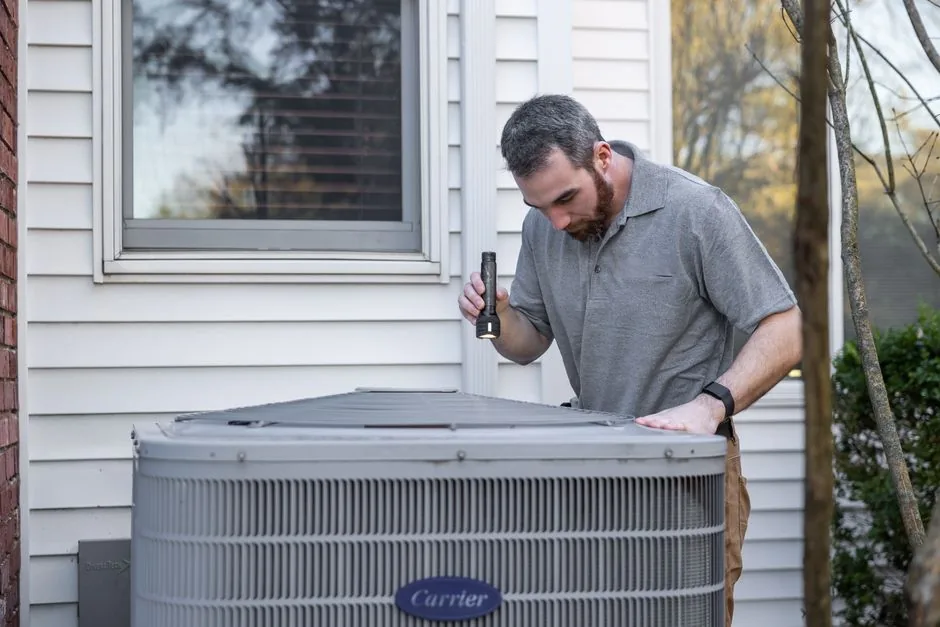
Nine times out of ten it's one of a few things, and the first ones you can check yourself. Confirm the unit is in cool mode (not heat or fan-only) with the set-point actually below room temperature, then check the filters — a clogged filter alone can stop a unit cooling. If it's still blowing warm after that, it's most often lost refrigerant through a slow leak, or a failing compressor or fan — none of which are a DIY or a top-up-bottle job. Refrigerant work is legally restricted to F-Gas certified engineers, so that's where it goes next.

TDThe Datum team · Heating, cooling & plumbing engineers · 3 min
What size air conditioning do I need for a room?Air con

What size air conditioning do I need for a room?

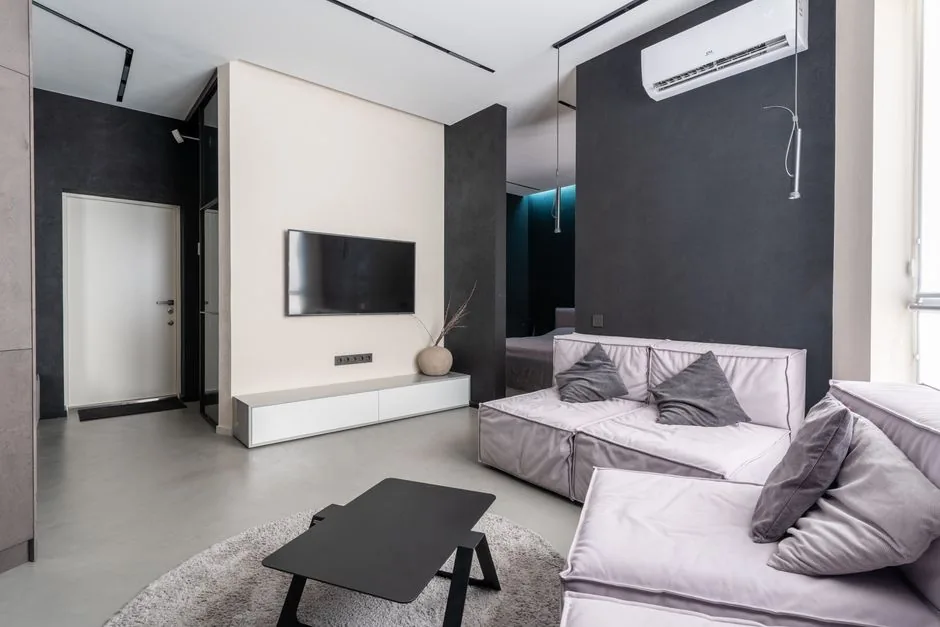
Air conditioning is sized in kilowatts to the room's heat load, and that's driven by more than floor area — glazing, which way the room faces, insulation, how many people and how much kit (a home office with a computer runs hotter). As a rough guide a typical bedroom suits a 2.0–2.5kW unit and a bright living room 3.5kW+, but a south-facing glass-heavy room needs more than its floor area suggests. Undersize it and it runs flat-out, never quite cools, and uses 20–30% more energy; oversize it and it short-cycles inefficiently. Correct sizing at the survey is the single biggest running-cost decision.

TDThe Datum team · Heating, cooling & plumbing engineers · 3 min
Can air conditioning heat my home in winter?Air con

Can air conditioning heat my home in winter?

Yes — and it's the half of the value most people miss. A home air-conditioning unit is an air-to-air heat pump: in winter it runs in reverse and heats the room, and because a heat pump moves heat rather than burning fuel to make it, you get roughly three or more kilowatts of heat per kilowatt of electricity. For heating the rooms you actually live in — a home office, a bedroom, a snug — it's among the cheapest ways to heat one room in the UK. It cools in summer and heats in winter from the same unit.

TDThe Datum team · Heating, cooling & plumbing engineers · 3 min
Is home air conditioning worth it in the UK?Air con

Is home air conditioning worth it in the UK?

Increasingly, yes — but for a reason most people miss. UK summers are genuinely getting hotter and bedrooms that stay cool are now a real quality-of-life (and sleep) issue. But the honest case for air conditioning isn't just the two hot weeks: a modern unit is an air-to-air heat pump, so it heats efficiently in winter too. That turns it from a seasonal luxury into a year-round system that cools in summer and cheaply heats the rooms you use most in winter. Where it's not worth it: if you only want it for a handful of nights and won't use the heating side, a good fan may do.

TDThe Datum team · Heating, cooling & plumbing engineers · 3 min
What's the best air conditioning for a bedroom?Air con

What's the best air conditioning for a bedroom?

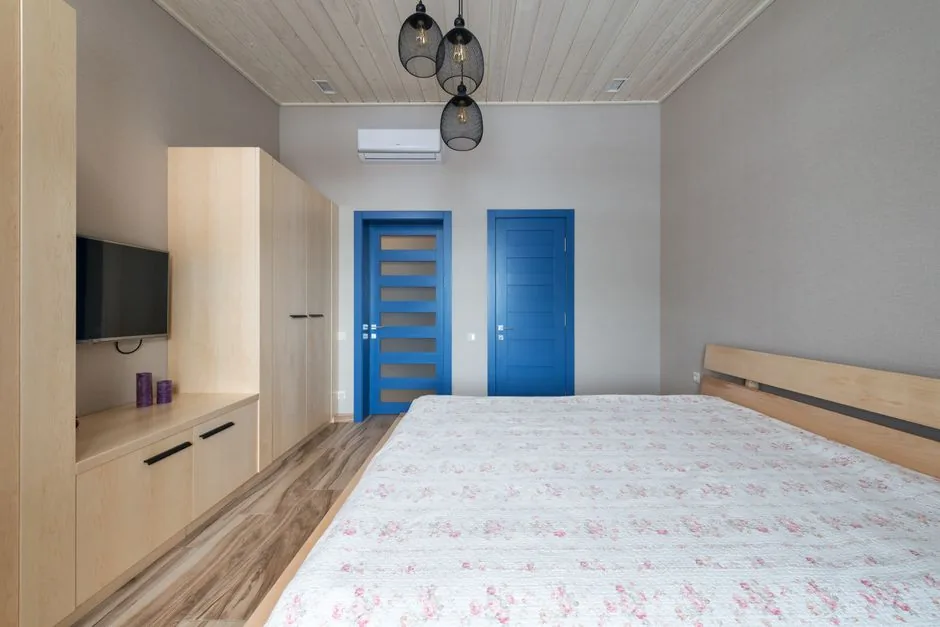
For a bedroom the priorities flip from a living room: it's about how quiet and how gentle, not how powerful. The best bedroom units are quality inverter models (Daikin, Mitsubishi Electric and similar) that run near-silently on sleep mode — conversation-level or below — and hold a steady temperature without the on-off blasts of a cheap unit. Size matters the other way too: most bedrooms suit a modest 2.0–2.5kW unit, and siting is half the job — positioned so the airflow never blows directly onto the bed. Get those right and you barely know it's there.

TDThe Datum team · Heating, cooling & plumbing engineers · 3 min
Single-room or multi-room air conditioning — which do I need?Air con

Single-room or multi-room air conditioning — which do I need?

It comes down to how many rooms you genuinely want to control and how they're laid out. A single-room (single-split) system is one indoor unit and one outdoor unit — simplest, cheapest per room, ideal if you mainly want one space sorted. A multi-room (multi-split) system runs several indoor units from one outdoor unit — tidier outside and great when you want a few rooms independently controlled. But multi-split isn't automatically cheaper: past three or four rooms, two smaller systems can cost less and give you redundancy. We size it to your actual rooms, not a sales preference.

TDThe Datum team · Heating, cooling & plumbing engineers · 3 min
What is a thermal store, and how does it work?Hot water

What is a thermal store, and how does it work?

A thermal store flips the usual cylinder idea around. Instead of storing your hot tap water, it stores a tank of hot 'heating' water, and when you turn on a tap the incoming cold mains passes through a heat exchanger inside the store and comes out hot, instantly, at mains pressure. Because the water you actually use is never stored — only heated as it flows — a thermal store doesn't fall under the unvented (G3) pressure rules, and it happily takes heat from several sources at once (a boiler, a heat pump, solar thermal, even a wood burner). That flexibility is its whole point.

TDThe Datum team · Heating, cooling & plumbing engineers · 3 min
Thermal store or unvented cylinder — which should I choose?Hot water

Thermal store or unvented cylinder — which should I choose?

Both deliver strong, mains-pressure hot water — the difference is what they store and how they're regulated. An unvented cylinder stores your hot tap water directly, under mains pressure, heated by the boiler; it's simple, gives excellent flow for busy households, but it's a pressurised vessel so it needs a G3-qualified install and an annual safety check. A thermal store stores heating water and warms your tap water on demand through a heat exchanger; it avoids G3, takes several heat sources easily (heat pump, solar, boiler), but can have higher standing losses and a flow rate capped by the exchanger. For a standard gas home with high demand: usually unvented. For a multi-source or renewables setup: often a thermal store.

TDThe Datum team · Heating, cooling & plumbing engineers · 3 min
Which hot water cylinder do I need — vented, unvented, or a thermal store?Hot water

Which hot water cylinder do I need — vented, unvented, or a thermal store?

There are three broad routes. A vented cylinder is fed from a cold tank in the loft, giving gravity-fed (lower) pressure — cheap and simple, common in older homes. An unvented cylinder is fed directly from the mains, storing hot water at mains pressure for strong flow to every tap — the modern default, but it needs good incoming mains and a G3 install. A thermal store heats water on demand and suits multiple or renewable heat sources. Which you need comes down to your incoming mains pressure and flow, how much hot water you use at once, your heat source, and space. Size is then set by bathrooms and occupants, not house price.

TDThe Datum team · Heating, cooling & plumbing engineers · 3 min

Question not answered?

Ask us directly — we'll be straight with you, even if the answer is no.

Call nowGet my price →
WhatsApp